

Understanding Heat, Stress, and Long-Term Speaker Damage
A car speaker is designed to work in a harsh environment.
Unlike home audio systems, it operates inside a space with:
- High temperature
- Continuous vibration
- Limited cooling
- Long playing hours
Over time, even a good car audio system may start to lose performance.
So the real question is not just how long a speaker lasts, but:
Why do car speakers actually fail?
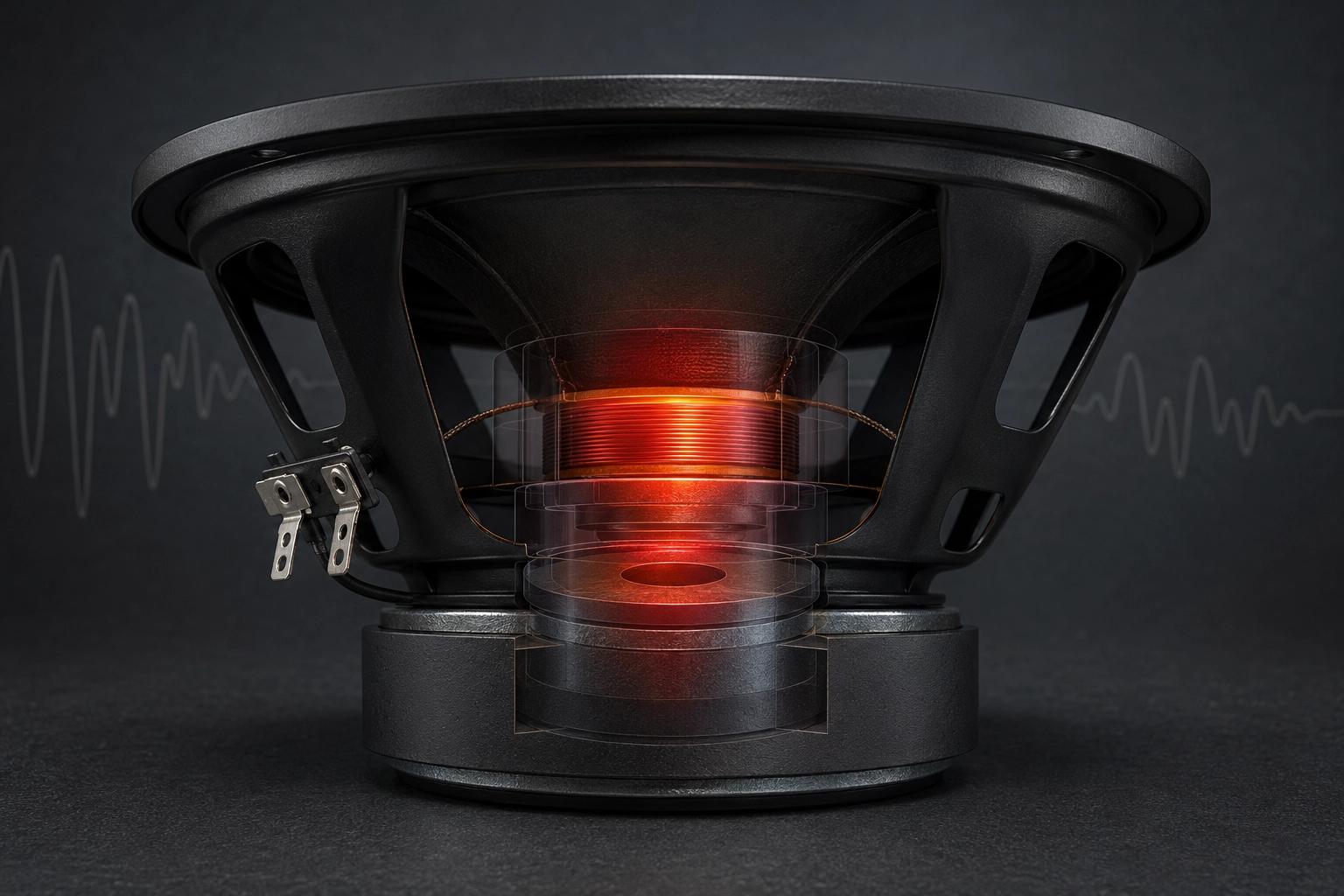
1.Voice Coil Overheating (The Most Common Failure)
The voice coil is the core of every car speaker.
It converts electrical energy into motion.
When it overheats, problems begin:
- Sound distortion
- Weak output
- Permanent damage
Why overheating happens:
- Too much amplifier power
- Long-term high volume use
- Signal clipping (distorted input signal)
Once the coil insulation is damaged, the speaker performance drops permanently.
This is the most common reason for car speaker failure
2.Mechanical Fatigue (Cone and Surround Damage)
A car speaker moves thousands of times per second.
Over time, mechanical parts wear out:
- Cone becomes less stable
- Surround loses elasticity
- Suspension weakens
What you may hear:
- Buzzing sound
- Rattling at high volume
- Loss of bass control
This is not sudden damage — it is gradual mechanical fatigue.
3.Heat and Environment Stress
Inside a vehicle, temperature can change dramatically.
In summer, a parked car can reach very high internal heat levels.
This affects:
- Glue strength
- Cone materials
- Suspension components
Heat slowly reduces the stability of a car speaker system.
Heat is a silent but powerful factor in speaker aging.
4.Electrical Stress (Incorrect Power Matching)
A speaker must work within its designed power range.
Problems occur when:
- Amplifier is too weak → clipping distortion
- Amplifier is too strong → thermal overload
- Gain is incorrectly set
Electrical stress damages both:
- Voice coil
- Signal clarity
A properly matched system ensures long-term stability.
5.Installation Stress (Often Ignored)
Even the best car speakers can fail early due to poor installation.
Common issues:
- Loose mounting
- Excess vibration
- Air leaks in enclosure
- Incorrect positioning
These factors create extra physical stress during operation.
6.Material Aging Over Time
Every car speaker uses materials that naturally age:
- Foam or rubber surrounds
- Adhesives
- Diaphragm materials
Even without heavy use, materials gradually lose elasticity.
This leads to:
- Reduced bass response
- Lower clarity
- General performance decline
7.How to Extend Car Speaker Life
While no speaker lasts forever, you can significantly extend lifespan by:
✔ Using correct RMS power matching
✔ Avoiding distortion (clipping)
✔ Proper installation
✔ Good ventilation
✔ Choosing stable materials
A well-designed system always lasts longer than a poorly tuned one.
Final Thoughts
A car speaker does not fail because of one reason.
It fails because of combined stress over time:
- Thermal stress
- Mechanical stress
- Electrical stress
Understanding these factors helps you build a more reliable car audio system.
Good speakers are not only about sound quality on day one.
They are about stability over years of use.
At MR Audio, we design speakers with long-term performance in mind — because real sound must stay consistent.
Make It Roar.