

From Materials to Final Testing
When people look at a car speaker, they usually focus on the specifications:
- Power rating
- Size
- Magnet size
- Appearance
But a high-performance car speaker is not created by one single component.
Behind every reliable speaker is a complete manufacturing process involving:
- Material selection
- Precision assembly
- Engineering design
- Quality testing
Understanding how car speakers are made helps explain why some speakers deliver stable performance for years while others fail quickly.
1.Material Selection: The Foundation of Speaker Performance
The manufacturing process starts with choosing the right materials.
Every component affects the final sound and durability of a car speaker system.
Key materials include:
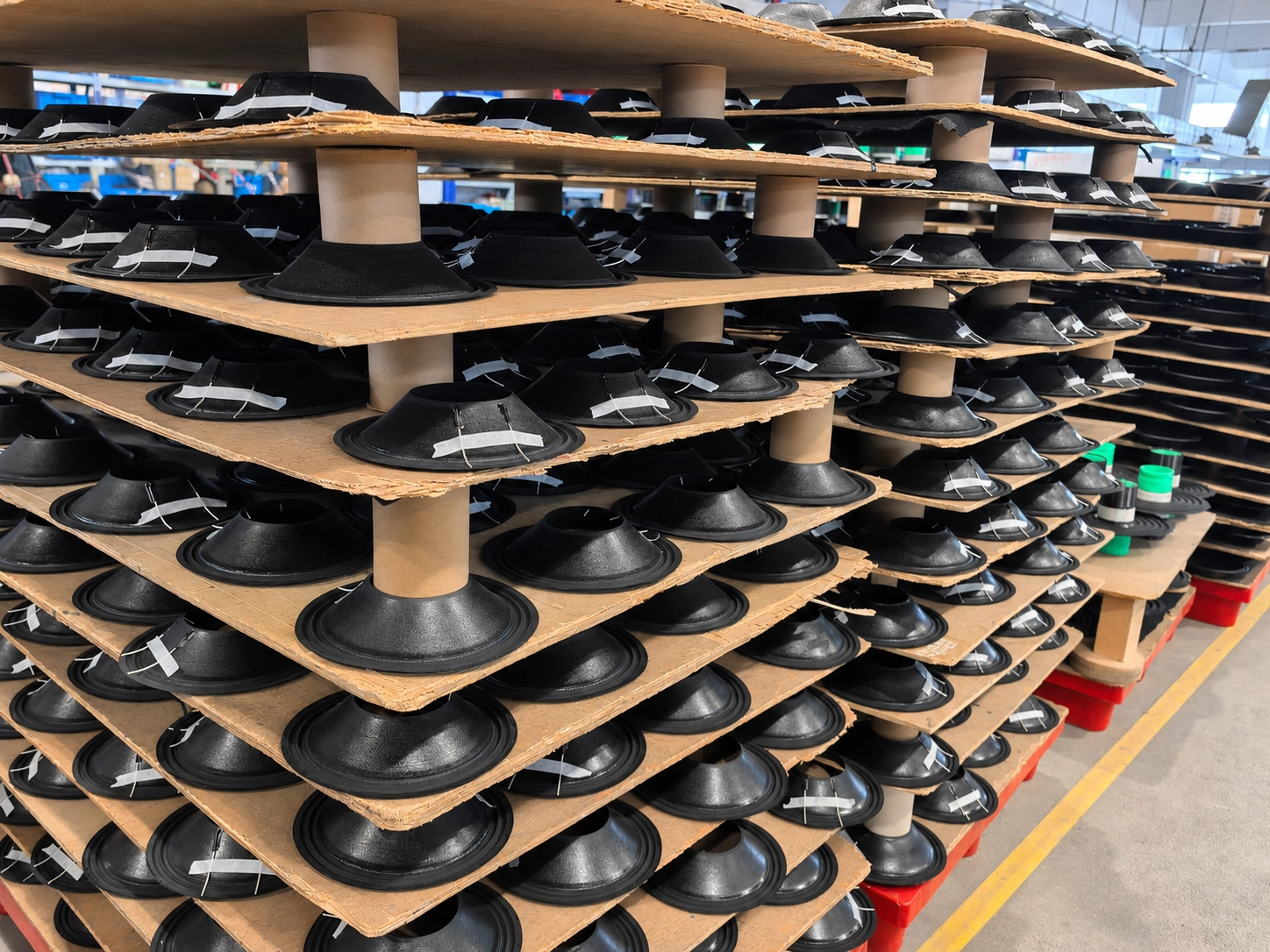
Cone Material
The cone is responsible for moving air and creating sound.
Common materials include:
- Paper
- Polypropylene
- Composite materials
Different materials affect:
- Sound response
- Weight
- Stiffness
- Durability
A well-designed cone needs to be lightweight while maintaining enough strength for controlled movement.
Voice Coil Material
The voice coil is the “engine” of the speaker.
It converts electrical signals into mechanical movement.
A quality voice coil needs:
- Good heat resistance
- Stable performance
- Accurate movement control
This directly affects:
- Power handling
- Efficiency
- Long-term reliability
Magnet System
The magnet works together with the voice coil to create the motor structure.
A properly designed magnetic system helps improve:
- Cone control
- Sensitivity
- Output stability
The goal is not simply a bigger magnet, but an efficient motor design.
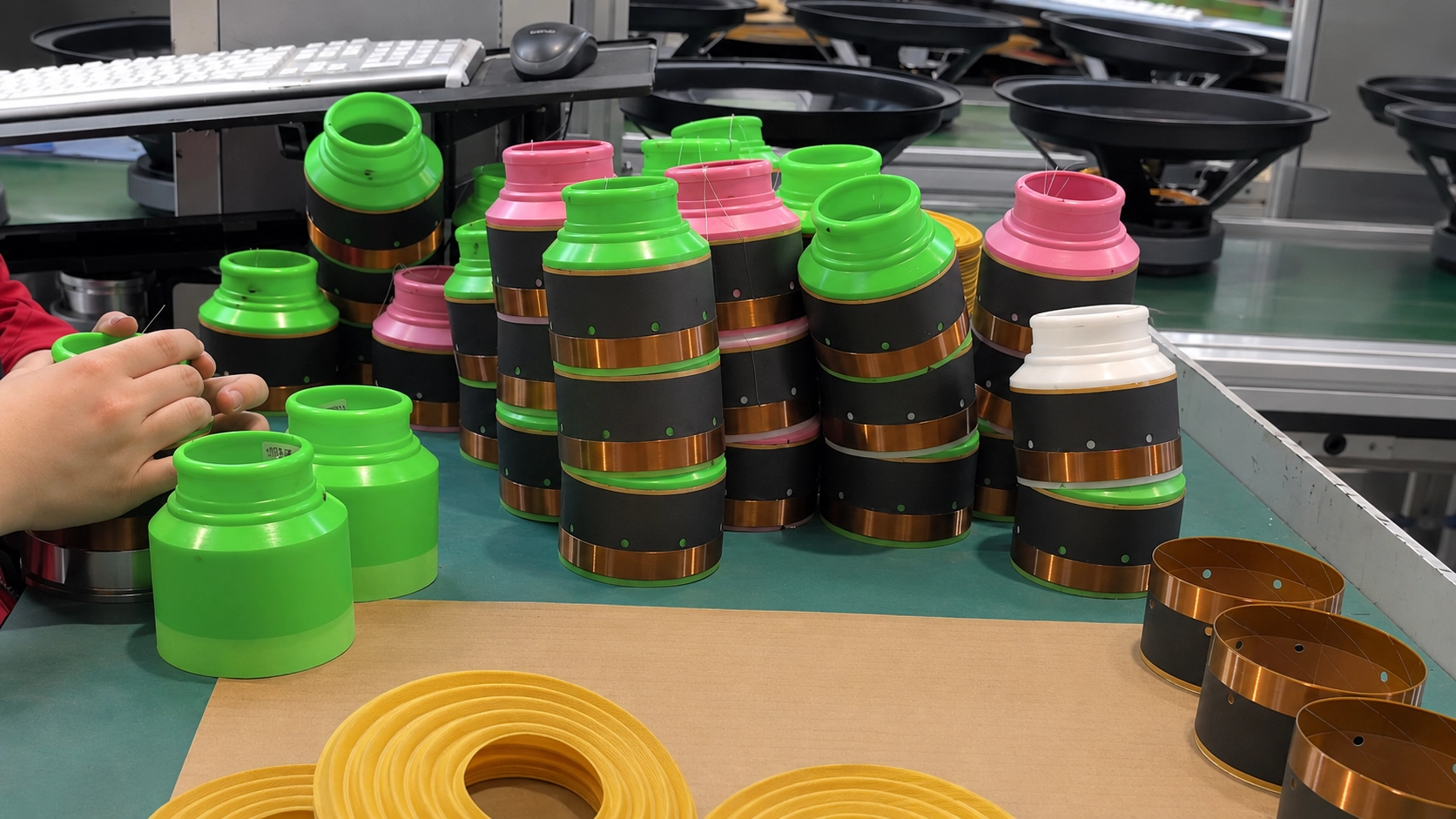
2.Voice Coil Manufacturing: The Heart of the Speaker
The voice coil is one of the most important parts of a car speaker.
During production, manufacturers carefully control:
- Wire winding
- Coil alignment
- Adhesive bonding
- Heat resistance
A poorly made voice coil can cause:
- Distortion
- Overheating
- Reduced lifespan
A well-produced voice coil allows the speaker to handle power while maintaining clear sound.
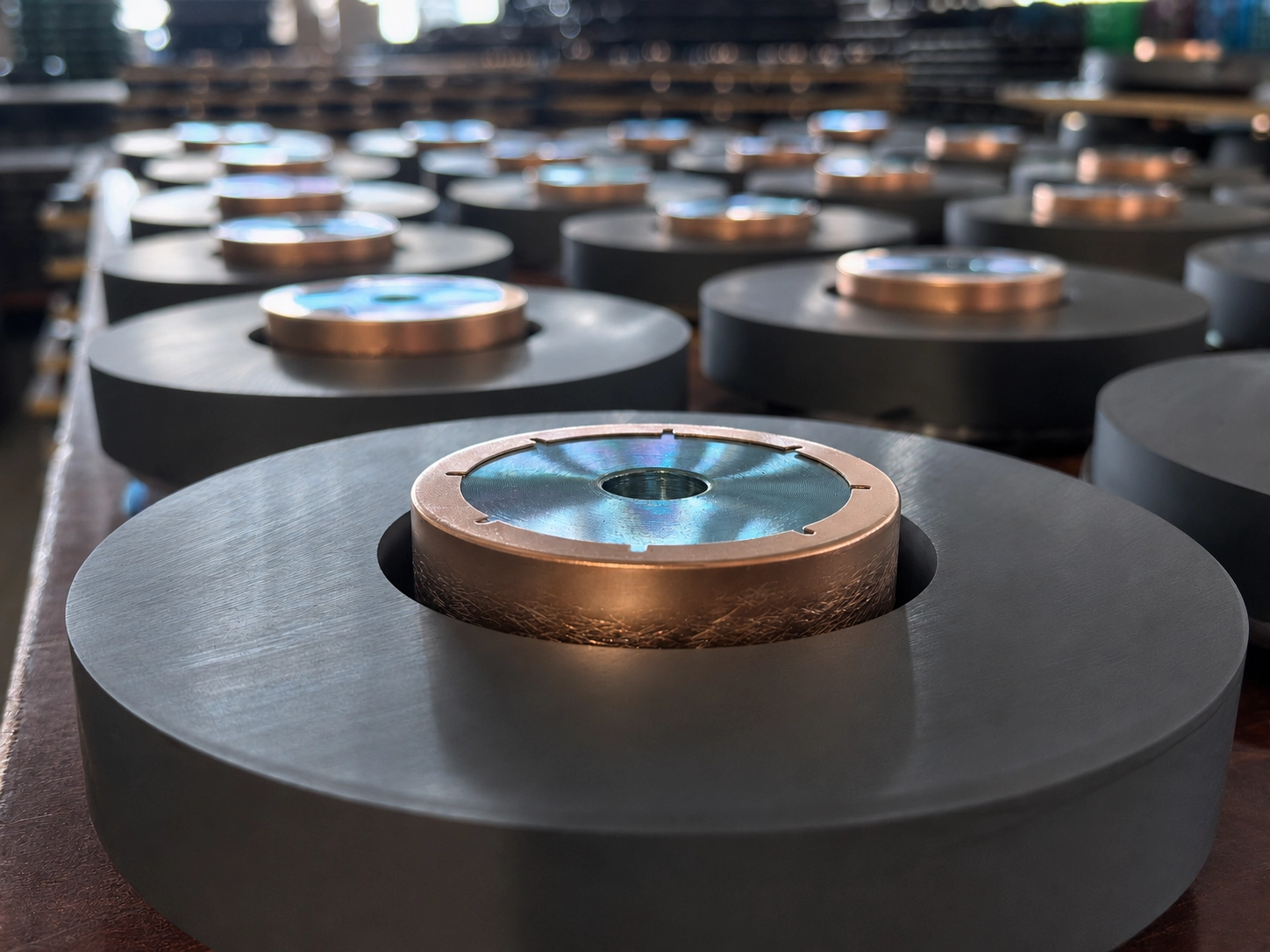
3.Magnet Assembly: Creating Controlled Movement
The magnet assembly creates the force needed to move the cone.
The process requires accurate positioning of:
- Magnet
- Top plate
- Back plate
- Voice coil gap
The magnetic gap must be precisely controlled.
Small differences can affect:
- Efficiency
- Sound consistency
- Speaker reliability
This is why manufacturing precision matters.
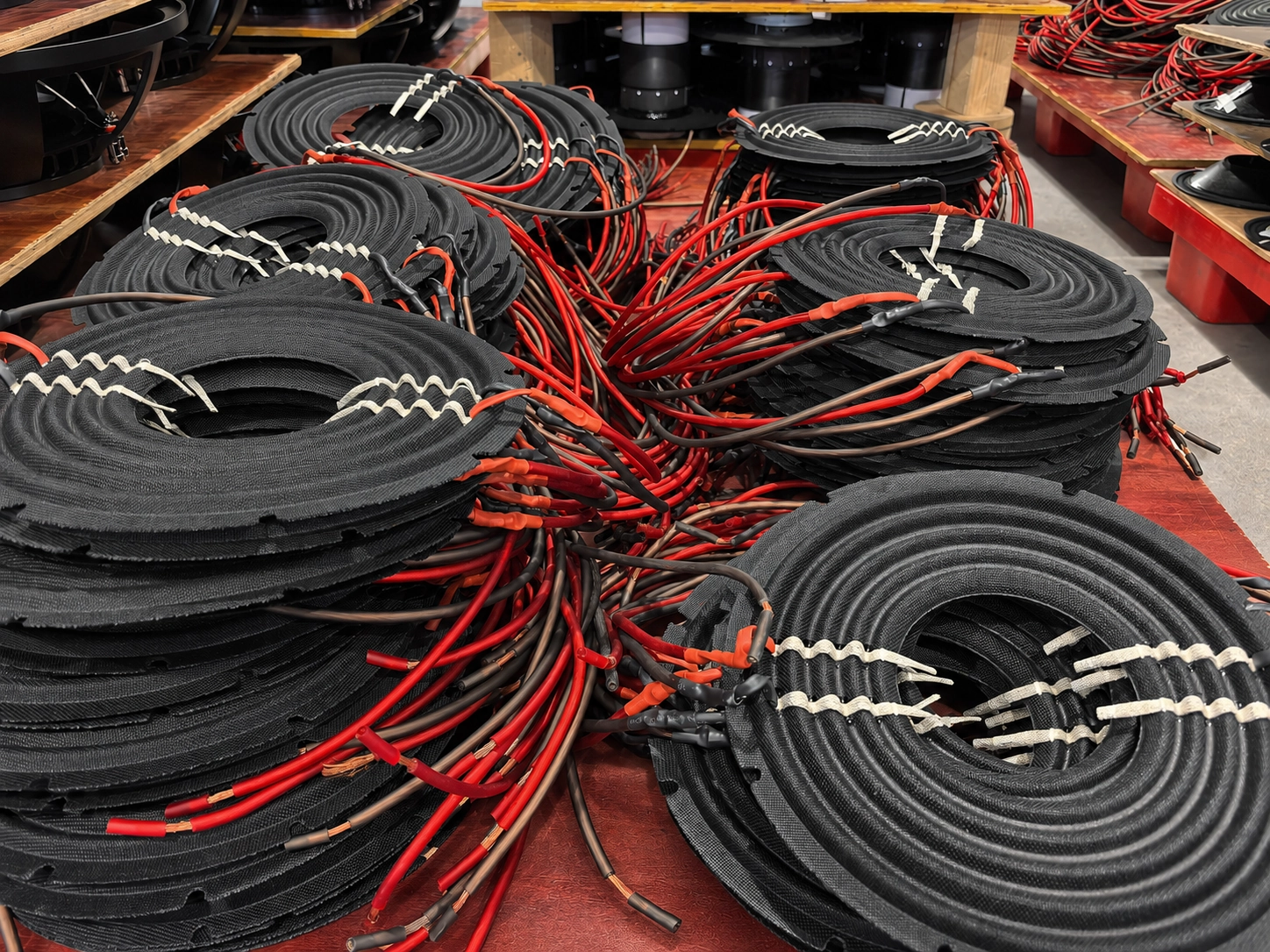
4.Cone and Suspension Assembly
The cone and suspension system determine how the speaker moves.
Important parts include:
Cone
Controls air movement and sound output.
Surround
Allows controlled cone movement while maintaining stability.
Spider
Controls the cone’s position and movement range.
Together, these parts affect:
- Bass response
- Distortion control
- Mechanical durability
A good suspension system helps the speaker perform consistently during long-term use.
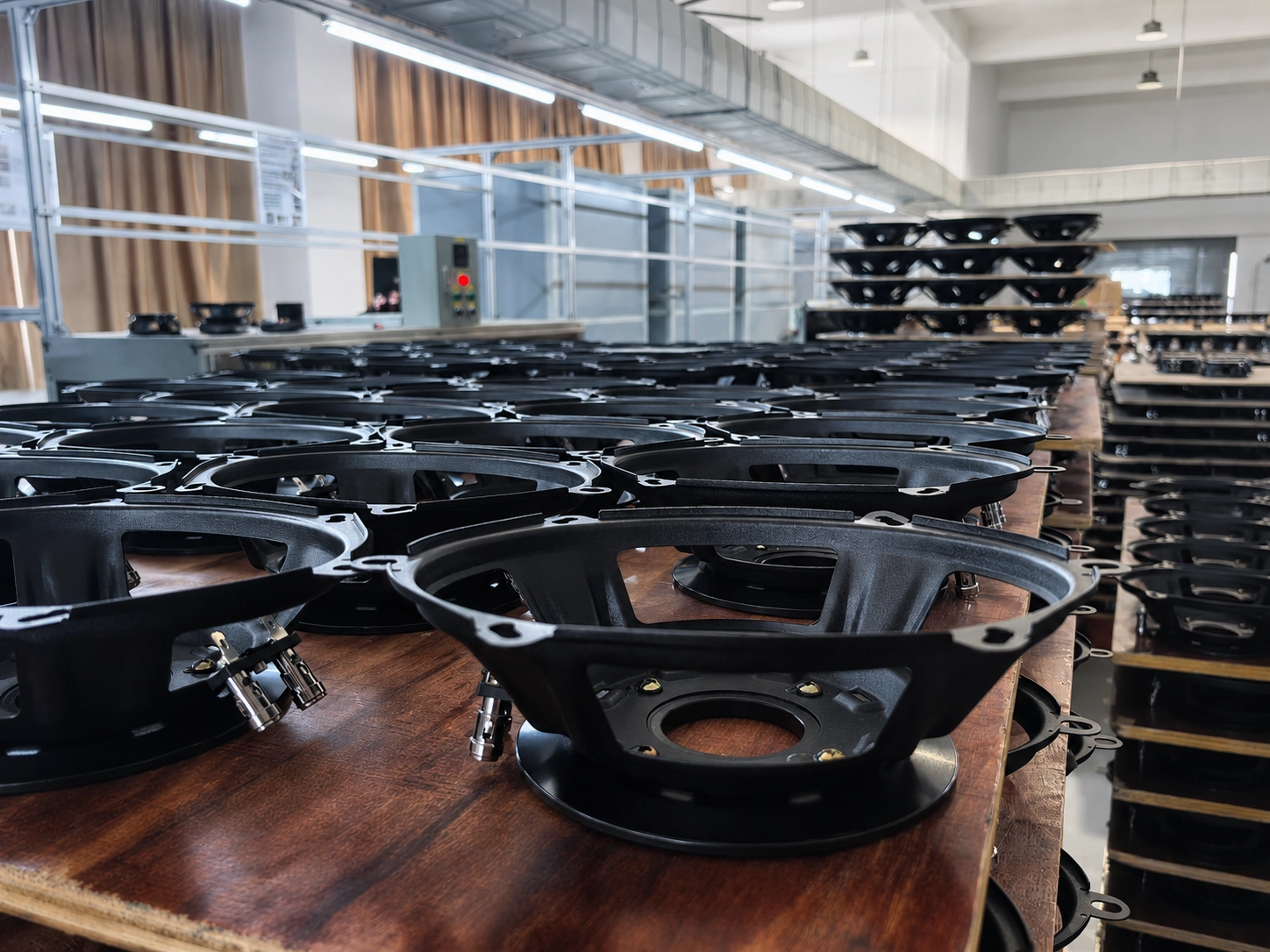
5.Speaker Assembly Process
After individual components are prepared, the speaker moves into final assembly.
A typical car speaker manufacturing process includes:
- Magnet system assembly
- Voice coil installation
- Spider and cone installation
- Surround bonding
- Dust cap installation
- Final mechanical inspection
Each step requires careful control to ensure product consistency.
6.Testing Before Delivery
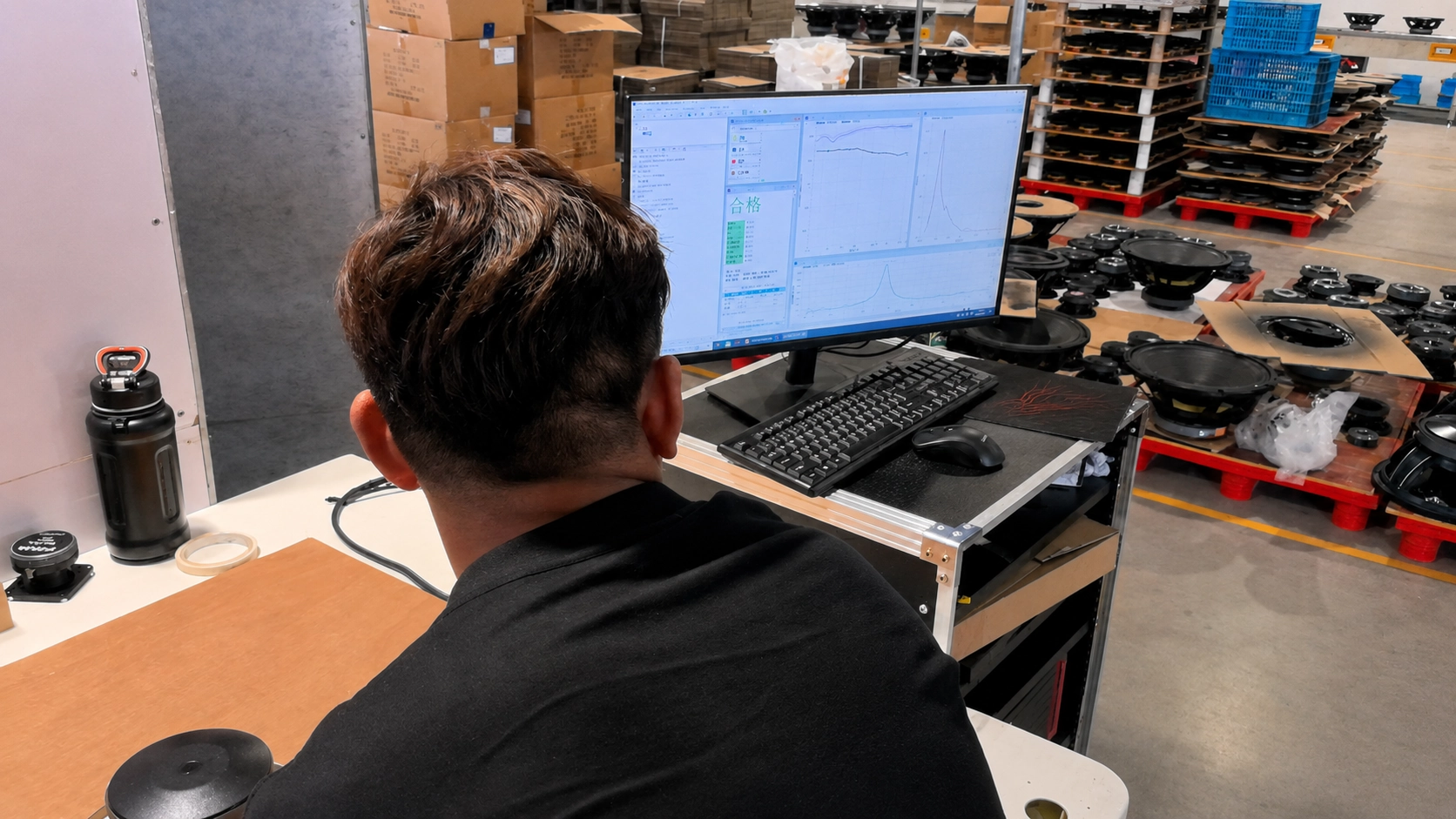
A professional car speaker manufacturer does not only produce speakers — it verifies performance.
Before delivery, speakers are tested for:
Electrical Performance
Including:
- Impedance
- Resistance
- Connection stability
Acoustic Performance
Including:
- Frequency response
- Sound output
- Distortion level
Power Performance
Including:
- Power handling
- Thermal stability
- Long-term operation
Testing ensures every speaker meets expected performance standards.
Why Manufacturing Quality Matters
Two speakers may have the same size and power rating, but their real performance can be very different.
The difference often comes from:
- Material quality
- Production accuracy
- Assembly control
- Testing standards
A reliable car speaker manufacturer focuses on every detail because small differences can affect the final user experience.
Final Thoughts
A great car speaker is not simply assembled — it is engineered.
From material selection to final testing, every step influences:
- Sound quality
- Durability
- Reliability
For distributors, brands, and audio professionals, choosing the right manufacturing partner means choosing consistent performance over time.
At MR Audio, we believe great sound starts before the speaker reaches the vehicle.
It starts with careful design, controlled manufacturing, and a commitment to performance.
Make It Roar.